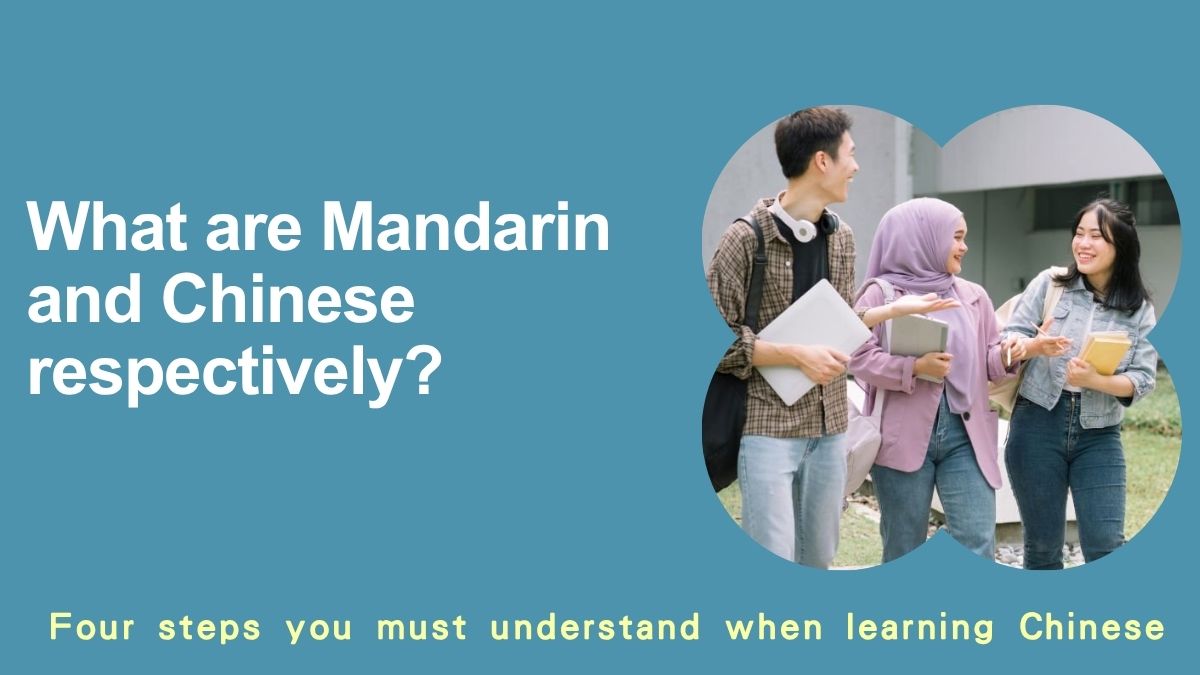
For many foreign learners, the difference between Mandarin and Chinese can be confusing.
For example, are the sentences “I’m learning Chinese” and “I’m learning Mandarin” referring to the same thing?
For beginners, this question is more important than it seems. Many people enroll in courses only to realize they are learning something different from what they expected. Others study from textbooks and speak in Taiwan, only to find that locals feel their speech sounds unnatural.
Most of these issues come from not clearly understanding the difference between Mandarin and Chinese from the beginning.
This article, prepared by Oh Young Language Center, will help you fully understand the distinction, explain what kind of Chinese is learned in Taiwan, and provide a clear learning path from zero.
1. What Is “Chinese”? A Big Umbrella Covering Dozens of Languages
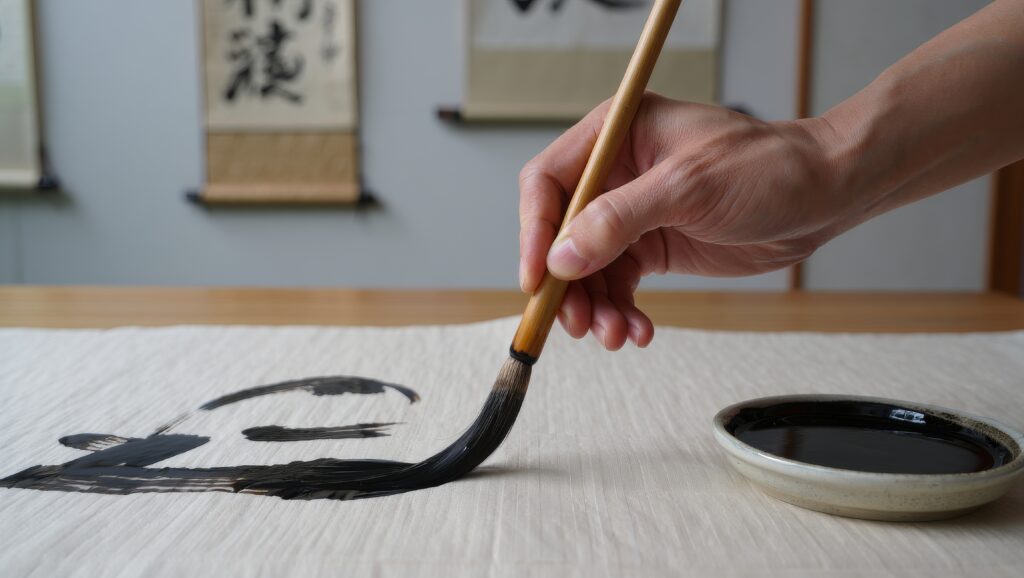
Many people think Chinese is a single language, but that is not accurate.
“Chinese” refers to a language family that includes dozens of languages and dialects. While they share a common writing system foundation, their spoken forms can differ drastically.
For example, a Cantonese speaker and a Taiwanese speaker can barely understand each other without written text.
Here are some major Chinese languages:
|
Language |
Chinese Name |
Regions |
Tones |
Mutual Intelligibility with Mandarin |
|
Mandarin |
普通話 / 國語 / 華語 |
China, Taiwan, Singapore |
4 (+ neutral) |
— |
|
Cantonese |
廣東話 |
Hong Kong, Macau, Guangdong |
9 |
No |
|
Hokkien / Taiwanese |
閩南語 / 台語 |
Taiwan, Fujian, Southeast Asia |
7 |
No |
|
Hakka |
客家話 |
Taiwan, Guangdong, Malaysia |
6 |
No |
|
Shanghainese |
吳語 / 上海話 |
Shanghai, Yangtze Delta |
5 |
No |
This clearly shows that even within “Chinese,” differences can be so large that communication is impossible. Saying “I want to learn Chinese” is as vague as saying “I want to learn a European language.”
2. What Is Mandarin? The Most Widely Used Chinese Language
Mandarin refers to Standard Chinese, also known as 普通話.
“Mandarin Chinese” simply adds clarification in English that it belongs to the Chinese language family.
Mandarin is one of the most widely spoken native languages in the world.
Interestingly, the word Mandarin comes from the Portuguese mandarim, referring to officials in imperial China. The language used by these officials eventually became the standard.
Mandarin has different names depending on the region:
|
Region |
Name |
Writing System |
Romanization |
|
Mainland China |
Putonghua (普通話) |
Simplified Chinese |
Pinyin |
|
Taiwan |
Guoyu (國語) |
Traditional Chinese |
Zhuyin (Bopomofo) |
|
Singapore / Malaysia |
Huayu (華語) |
Simplified Chinese |
Pinyin |
In short, Mandarin is the same standard language across regions, with differences in naming, writing, and pronunciation tools.
3. Mandarin vs. Chinese: A Complete Comparison
|
Category |
Mandarin |
Chinese |
|
Scope |
A specific language |
A broad language family |
|
Official Status |
Official in China, Taiwan, Singapore |
Varies by language |
|
Speakers |
~1.1 billion native speakers |
~1.35 billion total |
|
Writing System |
Traditional / Simplified |
Depends on language |
|
Tones |
4 tones + neutral |
Varies (e.g., Cantonese has 9) |
|
Mutual Intelligibility |
Mostly mutual among speakers |
Often not mutually intelligible |
|
Learning Resources |
Extensive and standardized |
Varies greatly |
Conclusion:
Mandarin is one type of Chinese, but it is the most widely used, best-supported, and most practical to learn.
For most learners, learning Chinese essentially means learning Mandarin.
Oh Young Language Center offers comprehensive Chinese learning resources, a professional teaching environment, and can provide specialized Chinese learning courses tailored to your needs. Free consultations are available in Prague.
4. What Do You Learn in Taiwan?
In Taiwan, Mandarin is called Guoyu (國語).
It is the same language system as Mainland China’s Putonghua, but with differences in:
|
Aspect |
Taiwan Mandarin |
Mainland Mandarin |
|
Writing |
Traditional Chinese |
Simplified Chinese |
|
Phonetic System |
Zhuyin |
Pinyin |
|
Accent |
Softer, fewer retroflex sounds |
Strong retroflex sounds |
|
Vocabulary |
機車, 捷運, 便當 |
摩托车, 地铁, 盒饭 |
These differences affect learning materials but not communication.
The gap is similar to American vs. British English.
5. How to Choose Your Learning Direction
If you meet most of the following conditions, Mandarin should be your priority:
- You live, work, or study in Taiwan
- You need to communicate with Taiwanese, Chinese, or Singaporeans
- You want to read signs, menus, or social media in Taiwan
- You plan long-term residence or visa applications
- You are interested in Taiwanese culture or business
For most foreigners in Taiwan, Mandarin is the most efficient starting point.
If you wish to learn more systematically, after confirming your direction, the next step is to find a learning method that suits your pace. Oh Young Language Center offers a complete course plan from beginner to advanced levels, using small class or one-on-one teaching, taught by teachers with bilingual Chinese and English abilities. Book a free consultation now.

6. Four Steps to Start Learning Mandarin from Scratch
Step 1: Clarify Your Goals
Explain why you want to learn and where you plan to use the knowledge. The consultant at Oh Young Language Center reminds you that living in Taiwan more conveniently and preparing for exams are two completely different learning paths. The former focuses on speaking and everyday vocabulary, while the latter requires simultaneous practice in reading and writing.
Step 2: Choose Writing and Phonetic System
When studying in Taiwan, it is recommended to use traditional Chinese characters as the primary tool and phonetic symbols as a supplementary tool.
Road signs, books, and media in Taiwan all use traditional Chinese characters, while phonetic symbols are the system by which Taiwanese people learn Chinese pronunciation from a young age.
Teachers and teaching materials are based on this system, especially when learning Mandarin pronunciation.
Step 3: Choose a Learning Method
Options include classes, language exchange, and apps. For beginners, classes are usually most effective due to real-time correction.
Step 4: Build a Practice Routine
Practice at least 3 times per week for 30 minutes. Use real-life situations like speaking at stores or watching Taiwanese media.
Oh Young Language Center designs Chinese courses specifically for foreigners. Courses are offered in small classes or one-on-one, taught by teachers with bilingual Chinese and English teaching abilities. There are clear learning plans from beginner to advanced levels. If you want to find a learning method that suits you faster, you don’t have to figure it out on your own. Through free consultation, our advisors will directly plan the most suitable Chinese learning path for you based on your goals and time.
7. Common Questions About Mandarin vs. Chinese
1.Are Mandarin and Chinese the same?
Not exactly. Chinese is a language family; Mandarin is one language within it.
2.Can I communicate in China if I learn Mandarin in Taiwan?
Yes. Differences are minor and do not affect communication.
3.Should I learn Traditional or Simplified Chinese?
If you live in Taiwan, Traditional Chinese is the natural choice.
4.How long does it take to communicate in daily life?
According to FSI, full fluency takes ~2200 hours, but basic communication can be achieved in 6–12 months.
5.Can I start learning in Taiwan without understanding the difference?
Yes. Taiwan offers complete beginner-friendly Mandarin programs.
6.What is the simplest way to understand the difference?
Chinese = a language family
Mandarin = the most widely used language within it
7.Does “Mandarin” mean orange?
Yes, but only in a different context. In language learning, Mandarin refers to the language.